
Chart Your Long and Short-Term Goals With the INSEAD Chief Strategy Officer Program

- Challenges in Balancing Long-Term Vision and Short-Term Objectives
- The INSEAD Chief Strategy Officer Course—Your Strategic Edge
- Key Strategic Leadership Skills that CSOs Gain to Balance Long-Term Vision With Short-Term Goals
- Features That Make the INSEAD Chief Strategy Officer Course Ideal
- INSEAD Chief Strategy Officer Program for an Elaborate Long- and Short-Term Strategy Road Map
| Synopsis: This blog explores how the INSEAD Chief Strategy Officer Program equips leaders with the strategic leadership and decision-making skills to balance long-term vision with short-term goals. By providing insights into strategic prioritization, the program empowers chief strategy officers (CSOs) to effectively manage short-term demands while ensuring that all initiatives contribute to the organization’s long-term vision and sustainable business success. |
Leaders face a constant tug-of-war between the allure of immediate results and the imperative of long-term strategic goals. Short-term goals are often fixated on factors such as profitability, cost-cutting measures, and market expansion. These factors are crucial for helping organizations stay profitable and attain a competitive advantage. Meanwhile, long-term goals that focus on innovation, sustainability, research, and development, among others, are crucial for an organization’s resilience and integrity. Achieving both these goals is crucial for an organization’s success.
The INSEAD Chief Strategy Officer Program equips you with the leadership skills and strategic management capabilities to strike the perfect harmony between long- and short-term goals. Whether you are a chief strategy officer, vice president, or senior strategy executive, this program offers the knowledge and skills to thrive in high-impact strategic roles. This executive education experience focuses on the delicate balance strategy leaders must maintain—driving growth initiatives today while architecting tomorrow’s success.
Challenges in Balancing Long-Term Vision and Short-Term Objectives

Stakeholders often pressure CSOs to compromise on longer-term objectives such as consumer satisfaction to achieve short-term strategic initiatives such as financial targets. This results in a clash with long-term goals like innovation, sustainability, and strategic growth. Prioritizing one over the other may have repercussions, for example, losing brand integrity. Case in point: Electronic Arts (EA). The world’s biggest computer game company was also named America’s worst by a Consumerist poll. The reason for this bad PR was EA’s undue stress on profitability rather than on building and selling quality products for its consumers.
The INSEAD Chief Strategy Officer Program equips leaders with the tools and frameworks needed to navigate such conflicts effectively, aligning immediate deliverables with visionary goals through world-class strategic planning and decision-making skills.
Resource allocation dilemmas: Executives have to make the difficult decision of investing optimal resources to achieve long-term goals while meeting immediate organizational needs. The challenge is often compounded by the dynamic nature of the economy, where unprecedented events may dampen even the most carefully laid out strategic development plan. CSOs must pivot strategically to invest resources and capitalize on unexpected opportunities.
Maintaining focus amidst distractions: It is commonplace for a chief strategist to lose focus on long-term objectives while being bombarded with urgent requests to address immediate business needs. Navigating bureaucratic hurdles, conflicting department priorities, and sheer data load can hinder an executive’s ability to balance an organization’s long-term vision with short-term objectives.
Building a culture that supports both perspectives: Getting the organization to buy into long-term strategic planning—especially when KPIs reward short-term performance—requires exceptional communication and leadership skills. The course helps executives build inclusive cultures that value long-term contributions and visionary thinking.
The INSEAD Chief Strategy Officer Course—Your Strategic Edge
Industry experts curated the INSEAD chief strategy officer course to equip leaders like you with the requisite strategic leadership and decision-making acumen with a global perspective to align long-term strategic vision with short-term needs. The curriculum is a balanced mix of academic rigor with real-world applications and case studies delivered through interactive online sessions.


The INSEAD chief strategy officer program curriculum focus for long-term strategy education
The curriculum of the INSEAD chief strategy officer program focuses on specific long-term goals through topics such as:
Business strategy architecture: Align stakeholder interests with corporate vision through advanced strategic frameworks and critical thinking exercises.
Continuous innovation and growth: Learn to apply blue ocean strategy and ecosystem-based approaches to seize emerging opportunities.
Negotiation for strategic buy-in: Gain tools to secure organizational alignment around long-term objectives and cross-functional strategic initiatives.
The INSEAD chief strategy officer course curriculum focus for short-term wins
The INSEAD chief strategy officer course covers topics that bolster your strategic leadership skills to pursue short-term goals without losing sight of the long-term objectives.
Agile strategies: Develop strategies that respond to market shifts without losing sight of overarching goals.
Supply chain strategies: Build resilient operational systems that support both efficiency and innovation.
Global strategy retrenchment: Navigate economic volatility and pivot as needed without derailing the long-term roadmap.
Explore more about the program: Leadership Training for Data-Driven Decision-Making | INSEAD CSO Programme
Key Strategic Leadership Skills that CSOs Gain to Balance Long-Term Vision With Short-Term Goals

The INSEAD chief strategy officer program equips you with the leadership skills and global perspectives required to design a comprehensive corporate strategy that aligns long-term vision with short-term gains to ensure the organization’s profitability and sustainability. Through the course of the program you will be able to:
- Formulate scalable strategies that address short-term goals while staying anchored in sustainable long-term objectives.
- Strengthen cross-functional influence through compelling storytelling and strategic communication.
- Deploy agile strategies to respond to uncertainty with speed and confidence.
- Foster innovation and cultural buy-in across teams and departments.
Features That Make the INSEAD Chief Strategy Officer Course Ideal
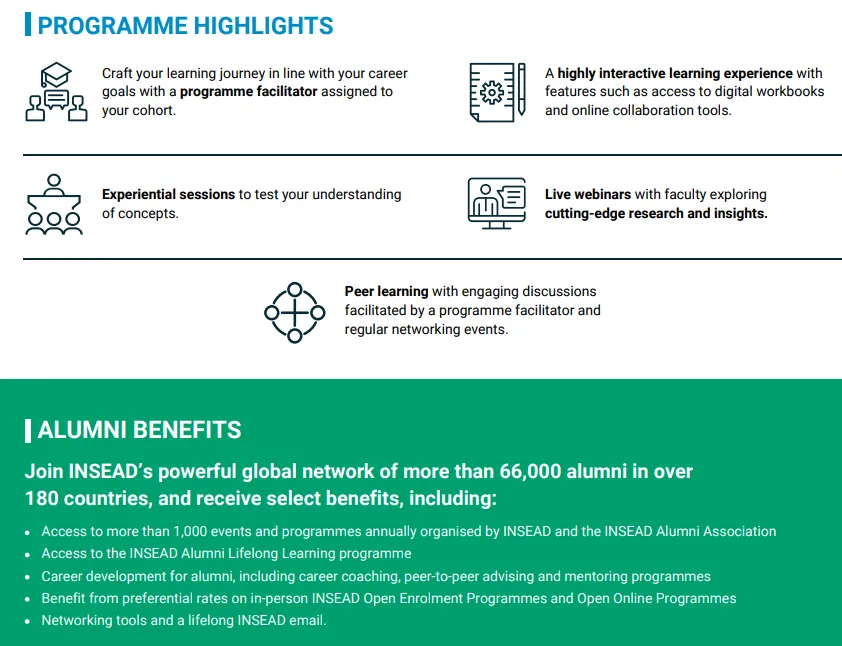
- Flexible learning through online and interactive sessions
- Live discussions and faculty insights to contextualize theory in your business setting
- Hands-on projects and exercises to build lasting competencies
- Peer-to-peer learning with global senior leaders
- Certificate of completion from INSEAD, a globally recognized business school
INSEAD Chief Strategy Officer Program for an Elaborate Long- and Short-Term Strategy Road Map
For every organization, both long- and short-term goals are priorities. Mastering the art of harmonizing these priorities demands revolutionary strategic acumen, global perspectives, and an in-depth understanding of market dynamics. The INSEAD chief strategy officer program provides a hands-on learning approach, real-world business case postmortem, and peer-to-peer learning within the INSEAD business environment.
The program empowers leaders with enhanced strategic leadership and decision-making skills to craft robust long-term strategies that align with organizational values and market realities. Simultaneously, participants develop short-term strategic planning processes that can be adjusted to address immediate challenges and capitalize on emerging opportunities.
Explore how the INSEAD Chief Strategy Officer Program can strengthen your ability to manage today’s challenges while building tomorrow’s success. Equip yourself with skills to formulate and execute strategies that balance tactical execution with visionary growth.
References: