
Top Courses to Pursue After a Healthcare Management Degree
| Synopsis: Explore top certificate programs and advanced courses designed to help healthcare professionals and healthcare managers build on the foundations laid by a healthcare management degree. |
Today’s healthcare leaders face complex challenges in healthcare systems. From adopting AI in healthcare and leading healthcare digital transformation to improving patient outcomes through evidence-based problem-solving, most of these challenges are baffling to even experienced professionals. Specialized certificate programs and healthcare leadership training offer the tools healthcare professionals and healthcare managers need to enhance the patient experience and drive innovation across healthcare services.
If you have a healthcare management degree and are seeking options to improve your executive and leadership impact in the healthcare industry, we have curated the top programs to help you.
Note: The sequence of programs listed in this article does not constitute a ranking, endorsement, preference or relative standing.
Top Courses to Pursue After a Healthcare Management Degree at a Glance
| Program | Best For |
| Emory University — Chief Medical Officer Program
(9–12 months) |
Physicians preparing for or newly appointed to the CMO role; senior clinicians aiming to influence healthcare organizations at the system level |
| Harvard T.H. Chan School of Public Health — Global Public Health Leadership Program
(5–6 months) |
Public health executives, healthcare leaders, researchers, and nonprofit professionals aiming to influence global health outcomes |
| Harvard Medical School — Executive Program for Senior Life Sciences Leaders
(8 months) |
Senior life sciences leaders, healthcare executives moving into biotech/pharma, startup founders, and consultants seeking executive healthcare leadership |
| MIT xPRO — Artificial Intelligence in Healthcare: Fundamentals and Applications
(7 weeks) |
Healthcare professionals and managers applying AI to improve patient outcomes and drive innovation |
| Harvard Medical School — AI in Health Care: From Strategies to Implementation
(8 weeks) |
Healthcare leaders/executives, clinicians, researchers, policymakers, and innovation teams implementing AI in healthcare |
| Rice University — Professional Certificate in Healthcare Management
(6 months) |
Experienced and aspiring healthcare managers seeking structured leadership growth and greater impact on patient outcomes |
| Rotman School of Management — Healthcare Analytics: AI, Big Data & Digital Transformation
(7 weeks) |
Mid- to senior-level managers, C-suite executives, entrepreneurs, and consultants needing healthcare data analytics capability |
| Johns Hopkins Carey Business School — Strategic Healthcare Leadership Program
(4 months) |
New and emerging leaders, functional heads, and executives/C-suite officers building strategic healthcare leadership to manage complexity and growth |
| Emory University — Strategic Leadership in Healthcare
(6 weeks) |
Healthcare leaders/strategists/executives sharpening strategy, competitive frameworks, and Quadruple Aim impact |
| Harvard Medical School — Leading Digital Transformation in Health Care
(6 weeks) |
Business/clinical leaders and change agents managing digital adoption across healthcare systems |
| Imperial College Business School — Digital Transformation in Healthcare: Innovation Strategies & Processes
(9 weeks) |
C-suite executives, clinical leaders, consultants, and entrepreneurs leading healthcare digital transformation initiatives |
Note: The sequence of programs listed in this article does not constitute a ranking, endorsement, preference or relative standing.
These programs are designed to help clinical professionals advance their leadership skills to excel and lead in the healthcare leadership domain.
Emory University — Chief Medical Officer Program
Duration: 9–12 months
Format: Online + Live Virtual, with optional in-person forum
Best For: Physicians preparing for or newly appointed to the CMO role, and senior clinicians aiming to influence healthcare organizations at the system level.
The Chief Medical Officer Program from Emory University is designed for physician leaders who want to advance beyond clinical expertise into organizational leadership. Building on a medical degree and extensive medical practice, the program focuses on strategic planning, problem-solving, and balancing the priorities of healthcare systems with the needs of patients, staff, and communities.


What You Will Learn
- Navigate competing priorities across clinical, financial, and operational dimensions.
- Apply evidence-based frameworks for quality improvement and safety.
- Lead change through negotiation, influence, and conflict management.
- Use data and finance insights to improve patient outcomes and manage utilization.
- Innovate care models and respond to digital disruption in healthcare delivery systems.
“The Chief Medical Officer Program was a game-changer for me. It didn’t just teach me how to lead, it gave me the strategic tools to drive change and solve real-world challenges. The program also revolutionized how I communicate, helping me connect with clarity, confidence, and intent. It’s a must for anyone stepping into leadership roles in healthcare.”
Dr. R. Amadeus Mason, Chief Medical Officer, Atlanta United FC; former Medical Director, USA Track & Field Championship Events
Benefits for You
- Earn up to 185 AMA PRA Category 1 Credits™ and an Emory credential to boost your healthcare leadership journey.
- Customize your journey with electives such as Strategic Leadership in Healthcare.
- Apply learning through a capstone business plan addressing a real-world organizational challenge.
- Build a professional network of global physician executives.
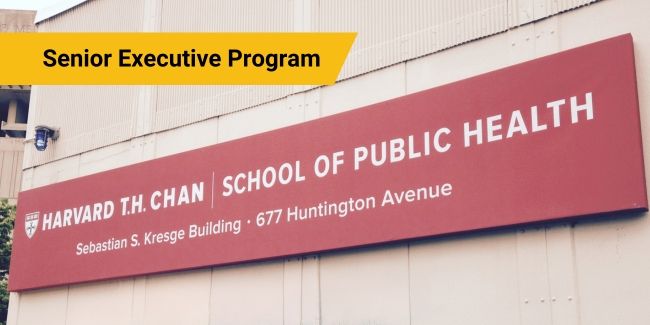
Harvard T.H. Chan School of Public Health — Global Public Health Leadership Program
Duration: 5–6 months
Format: On-campus, Online + Live Virtual
Best For: Public health executives, healthcare leaders, researchers, and nonprofit professionals aiming to influence global health outcomes.
The Global Public Health Leadership Program from Harvard Chan School equips professionals to lead in a rapidly changing landscape shaped by pandemics, climate change, and inequities. For those with a healthcare management degree, it extends leadership into healthcare systems and public health policy, focusing on evidence-based strategies that strengthen healthcare organizations globally.

What You Will Learn
- Address global health inequities and manage social determinants of health.
- Apply data tools, modeling, and AI to guide the delivery of healthcare services.
- Design and implement evidence-based policy interventions.
- Lead change across stakeholders and networks in diverse contexts.
- Balance local, regional, and global strategies to improve patient outcomes.
Benefits for You
- Earn 29.25 AMA PRA Category 1 Credits™ and a Harvard Chan School certificate program credential.
- Complete a capstone project tackling a real-world public health challenge.
- Learn from global faculty with expertise in healthcare systems and policy.
- Build a peer network of healthcare professionals worldwide.
“I liked the quality of the Global Public Health Leadership Program content. Even though there was a lot to cover in just 18 weeks, we had enough flexibility to get through modules and assignments. I appreciated the flexibility as a full-time professional being able to submit assignments in due course, recognizing the commitment to completing the course.”
—Jeanette Boohene, chief palliative care officer, Landmark Health (part of Optum Health)
Harvard Medical School — Executive Program for Senior Life Sciences Leaders
Duration: 8 months
Format: Online + Live Virtual
Best For: Senior life sciences leaders, healthcare executives transitioning into biotech/pharma, startup founders, and consultants seeking an executive healthcare leadership program.
Innovation in biotech and pharmaceuticals requires leaders who can bridge science, business, and regulation. For those with a background in health care management or a healthcare management degree, this program develops high-level problem-solving and leadership skills. Participants explore evidence-based approaches to drug development, AI integration, and market access, preparing them to lead healthcare organizations and delivery systems toward groundbreaking patient outcomes.


What You Will Learn
- Clinical development strategies and market access.
- AI in healthcare and digital trends shaping biotech.
- Patient engagement, access, and equity in trials.
- Leadership skills: negotiation, EQ, empathy, and change management.
- Strategic decision-making, risk evaluation, and growth opportunities.
Benefits for You
- Capstone project with six checkpoints for real-world impact.
- Faculty insights from Harvard Medical School and industry leaders.
- On-campus networking with global peers and experts.
- Practical frameworks: patient experience, digital therapeutics, real-world data.
- Earn an executive healthcare leadership certificate from Harvard Medical School.
Read more about how this Harvard program shapes life science leaders.
MIT xPRO – Artificial Intelligence in Healthcare: Fundamentals and Applications
Duration: 7 weeks
Format: Online | 5–7 hours per week
Best For: Healthcare professionals and managers with a healthcare management degree seeking to apply AI in healthcare to improve patient outcomes and drive innovation.
The future of healthcare organizations will be defined by their ability to harness AI applications in healthcare. This MIT xPRO program equips healthcare professionals who hold a healthcare management degree with practical tools in machine learning, neural networks, and generative AI in healthcare. Using real-world case studies, participants develop strategies to boost patient outcomes and transform delivery systems with evidence-based problem-solving.


What You Will Learn
- Understand the AI design process model for healthcare innovation.
- Explore machine learning, deep learning, neural networks, and natural language processing.
- Evaluate the role of generative AI in healthcare for diagnostics and treatment.
- Identify the benefits of AI in healthcare across drug discovery, patient monitoring, and decision-making.
- Address regulatory and ethical considerations in deploying AI systems.
Benefits for You
- Gain an MIT xPRO certificate and continuing education units to advance your career.
- Build a strategic AI decision framework tailored to healthcare.
- Learn directly from MIT faculty with research-driven case studies.
- Strengthen your portfolio with real-world projects applying AI to health challenges.
- Join a global peer network of innovators advancing digital transformation in healthcare.
Explore the best artificial intelligence programs for healthcare leaders.
Harvard Medical School — AI in Health Care: From Strategies to Implementation
Duration: 8 weeks
Format: Online + Live Virtual
Best For: Health care leaders and executives, clinicians, researchers, policymakers, and innovation teams seeking practical strategies to implement AI applications in healthcare.
Even the best healthcare leaders find it challenging to bring new technologies from the lab into practice. This AI in healthcare course from Harvard Medical School helps bridge that gap by teaching leaders—even those who possess a healthcare management degree—how to design, validate, and implement AI responsibly. Through case study analysis and startup-style projects, participants explore the benefits of AI in healthcare, ensuring innovations improve the patient experience while strengthening trust in healthcare systems.

What You Will Learn
- AI history, supervised vs. self-supervised learning, and LLM fundamentals.
- The end-to-end AI development pipeline, from problem framing to validation and deployment.
- Transparency, reproducibility, generalizability, and bias mitigation.
- Startup, wearable data, and product-market considerations for AI in healthcare.
Benefits for You
- Capstone pitch to turn strategy into an implementation plan.
- Weekly office hours and one live faculty session to stress-test decisions.
- Case studies from EchoNet-Dynamic, Google Health, and more to illustrate the benefits of AI in healthcare.
- Certificate of completion from Harvard Medical School Executive Education.
Check out the best AI in healthcare Harvard University programs.
Rice University — Professional Certificate in Healthcare Management
Duration: 6 months
Format: Online; 5–7 hours/week
Best For: Experienced and aspiring healthcare managers seeking a structured healthcare leadership program to expand responsibility and impact on patient outcomes.
For healthcare managers looking to advance beyond a bachelor’s degree in healthcare management, Rice University’s program focuses on practical leadership within healthcare delivery systems in the United States. Covering finance, HR, law, and strategy, the certificate program emphasizes evidence-based decision-making and problem-solving that directly impacts patient outcomes. It is a rigorous option for healthcare professionals seeking structured healthcare leadership training to shape high-performing healthcare organizations.


What You Will Learn
- Lead teams; apply value-based care and high-reliability concepts.
- Use Six Sigma, root-cause analysis, and quality tools.
- Budgeting, accounting, and finance for decision-making.
- Data, HIPAA/HITECH, marketing, innovation, HR, ethics, law, strategy.
Benefits for You
- Build a Healthcare Playbook and complete a capstone quality-improvement plan.
- Earn a Rice certificate with CEUs.
- Coaching, mentorship, and facilitator support.
- Interactive assignments, quizzes, and peer discussions.
Rotman School of Management — Healthcare Analytics: AI, Big Data & Digital Transformation
Duration: 7 weeks
Format: Online; 4–6 hours/week
Best For: Mid- to senior-level managers, C-suite executives, entrepreneurs, and consultants who partner with data teams and need healthcare data analytics training.
Data has become the lifeblood of modern healthcare services. Rotman’s healthcare analytics course prepares graduates of a healthcare management degree to turn raw data into insights that drive efficiency, innovation, and improved patient outcomes. With a curriculum blending AI in healthcare, predictive modeling, and generative AI applications, participants gain the skills to lead healthcare digital transformation projects that are both strategic and evidence-based.

What You Will Learn
- Data basics, KPI dashboards, and distributions.
- Machine learning and generative AI in healthcare use cases.
- Regression for prediction and effect estimation.
- Prescriptive analytics and decision science.
- Leading healthcare digital transformation and a data-driven organization.
Benefits for You
- Live sessions, Q&A, peer discussions, and “try-it” activities.
- Practical, real-world application exercises and knowledge checks.
- Digital certificate of completion from Rotman Executive Programs.
Johns Hopkins Carey Business School — Strategic Healthcare Leadership Program
Duration: 4 months
Format: Online; 3–5 hours/week
Best For: New and emerging leaders, functional heads, and executives/C-suite officers seeking healthcare leadership development and training to manage complexity and growth.
In an era where healthcare systems face financial pressures, talent shortages, and rising patient expectations, strong leadership is critical. The Johns Hopkins program builds on the foundation of a healthcare management degree by immersing participants in strategic planning, operations management, and equity-driven initiatives. Through case studies and real-world problem-solving, healthcare professionals learn to align resources, improve the patient experience, and lead resilient healthcare organizations.


What You Will Learn
- Build and motivate diverse teams; power, influence, and negotiation.
- Resilience, inclusion, equity, and access.
- Operations management, LEAN, and finance for leaders.
- Strategy, behavioral economics, and implementation science.
- Digital innovation and AI in healthcare.
Benefits for You
- Comprehensive, evidence-based curriculum taught by expert faculty.
- Hands-on learning, office hours, peer networking, and a capstone project.
- CME credit opportunity and a verified certificate of completion.
Emory University — Strategic Leadership in Healthcare
Duration: 6 weeks
Format: Online; 4–6 hours/week
Best For: Healthcare leaders, strategists, and executives seeking a healthcare executive training program to sharpen strategy, apply competitive frameworks, and meet the Quadruple Aim.
For seasoned healthcare professionals who want to amplify the value of their healthcare management degree, Emory provides a structured path into advanced strategic healthcare leadership. Through a mix of real-world case studies, problem-solving exercises, and peer collaboration, participants gain the tools to align healthcare organizations with evolving healthcare systems in the United States, driving sustainable growth and measurable patient outcomes.

What You Will Learn
- Strategy fundamentals and the building blocks of competitive advantage.
- U.S. healthcare context: regulation, stakeholders, and market forces.
- Cost and quality drivers: applying DMAIC process improvement.
- Access-provider well-being and population health strategies.
Benefits for You
- Individualized feedback from program leaders and expert faculty.
- Peer learning through case studies and group discussions.
- Playbook assignments applying strategic tools to your role.
- A verified executive healthcare leadership certificate from Emory.
Harvard Medical School — Leading Digital Transformation in Health Care
Duration: 6 weeks
Format: Online
Best For: Business leaders, clinical leaders, and change agents seeking healthcare leadership training programs to manage digital adoption across systems, providers, insurers, and device companies.
Leaders must be prepared to guide change as the healthcare industry integrates technologies like AI, IoT, and medical devices. Harvard Medical School’s program is designed for healthcare professionals with a healthcare management degree who want to understand what digital transformation in healthcare means in practice. Through case study exploration and a capstone project, participants of this healthcare digital transformation course build strategies that enhance the patient experience while addressing the challenges of digital transformation in healthcare systems.

What You Will Learn
- Digital transformation models across industries and health care.
- Enabling technologies: IoT, blockchain, AI in healthcare.
- Transformation management skills and governance structures.
- Creating an innovation culture and sustaining value from investments.
- Capstone project: build a digital transformation plan.
Benefits for You
- Insights from global faculty and industry experts.
- Real-world case studies from the United States, Europe, and Latin America.
- Cohort-based peer learning and executive coaching.
- A Harvard Medical School healthcare leadership certificate.
Imperial College Business School — Digital Transformation in Healthcare: Innovation Strategies & Processes
Duration: 9 weeks
Format: Online; 6–8 hours/week
Best For: C-suite executives, clinical leaders, consultants, and entrepreneurs aiming to lead healthcare digital transformation initiatives.
Few leaders fully understand the benefits of digital transformation in healthcare until they see it applied in practice. Imperial’s program, designed for executives who already hold a healthcare management degree, offers real-world simulations using tools like Simul8 to model how robotics, IoT, and AI in healthcare reshape healthcare services. By engaging with case studies and evidence-based frameworks, participants learn to improve patient experience and strengthen healthcare organizations through innovation.


What You Will Learn
- Digital platform models for hospitals, payers, and pharma.
- Understand what is digital transformation in healthcare and its success factors.
- Patient experience, inclusion, and risk of digital exclusion.
- Generative AI in healthcare, robotics, IoT, and big data applications.
- Simulation exercises modeling sepsis care improvement.
Benefits for You
- Interactive peer learning and knowledge checks.
- Hands-on simulation using Simul8 to model care outcomes.
- Insights from global faculty and guest speakers.
- Build a customized playbook for your healthcare organization.
- Receive a digital healthcare leadership certificate from Imperial.
FAQ on Top Courses to Pursue after a Healthcare Management Degree
1. What can I do after completing a healthcare management degree?
After a healthcare management degree, you can pursue advanced certificate programs and leadership courses in areas such as AI in healthcare, healthcare analytics, and healthcare digital transformation to strengthen your impact in healthcare organizations.
2. Who should consider executive healthcare leadership programs?
Healthcare professionals and other healthcare leaders with prior experience or a bachelor’s degree in health care management should consider executive programs to enhance strategic planning, problem-solving, and improve patient outcomes in healthcare systems.
3. What is digital transformation in healthcare?
Digital transformation in healthcare refers to the integration of technologies such as AI, IoT, robotics, and medical devices into healthcare services to improve efficiency, strengthen delivery systems, and enhance the patient experience.
4. What are the benefits of AI in healthcare?
The benefits of AI in healthcare include improved patient outcomes, efficient use of healthcare data analytics, and support for evidence-based decisions in healthcare organizations, from diagnostics to healthcare services delivery.
5. Do these programs provide certifications?
These programs provide certificates of completion, such as a healthcare leadership certificate or a healthcare analytics certificate online, but they are not formal certifications or degrees.
6. What will I learn in the MIT xPRO Artificial Intelligence in Healthcare program?
You will learn how AI applications in healthcare: using machine learning and generative AI in healthcare to support evidence-based problem-solving, improve patient outcomes, and strengthen healthcare systems through real-world case studies.
7. Who is the Harvard Medical School AI in Health Care program designed for?
This AI in healthcare course is designed for healthcare leaders, clinicians, policymakers, and innovators with a healthcare management degree who want to understand how AI is used in healthcare from strategy to implementation.
8. What is covered in the Rice University Professional Certificate in Healthcare Management?
The Rice University healthcare management bootcamp covers leadership, finance, quality, strategy, HR, and law. It helps healthcare managers improve healthcare services, strengthen delivery systems, and apply evidence-based problem-solving in healthcare organizations in the United States.
9. What does the Rotman Healthcare Analytics program focus on?
Rotman’s healthcare analytics course focuses on big data, predictive modeling, and AI in healthcare. Participants explore healthcare data analytics training and learn how to apply evidence-based insights to healthcare digital transformation projects.
10. What is unique about the Johns Hopkins Strategic Healthcare Leadership Program?
The Johns Hopkins Strategic Healthcare Leadership Program emphasizes strategic planning, equity, and operations. Through case studies, participants learn how to lead healthcare organizations and improve patient outcomes while advancing leadership in the healthcare industry.
11. How does the Emory Strategic Leadership in Healthcare program help leaders?
Emory’s Strategic Healthcare Leadership Program teaches problem-solving frameworks for cost, access, quality, and workforce challenges. It prepares healthcare professionals to strengthen healthcare systems using evidence-based strategies.
12. What will I gain from the Harvard Leading Digital Transformation in Health Care program?
You will learn what digital transformation in healthcare is in practice, using AI, IoT, and blockchain. The program equips healthcare professionals to manage healthcare digital transformation and improve the patient experience through case study learning.
13. Who should join the Harvard Executive Program for Senior Life Sciences Leaders?
This executive healthcare leadership program is for senior healthcare professionals and life sciences leaders. It focuses on evidence-based innovation, AI in healthcare, and problem-solving in clinical development and healthcare delivery systems.
14. What does the Imperial Digital Transformation in Healthcare program offer?
Imperial’s digital transformation in healthcare course explores robotics, IoT, and AI. Through real-world simulations and case studies, participants learn to improve patient outcomes and redesign healthcare services in global healthcare systems.
15. Do these programs require a bachelor’s degree?
Yes, most programs are designed for experienced healthcare professionals who already hold a bachelor’s degree or a healthcare management degree, ensuring participants can apply their learning to real challenges in healthcare organizations.
16. What makes the Harvard T Chan Global Public Health Leadership Program valuable for healthcare professionals?
The Harvard T Chan Global Public Health Leadership Program provides healthcare professionals and public health executives with tools in strategic planning, policy, and data-driven decision-making. By applying evidence-based approaches, participants strengthen healthcare organizations and contribute to sustainable improvements in healthcare systems and patient outcomes worldwide.
17. How does the Emory Chief Medical Officer Program support healthcare leaders in improving patient outcomes?
The Emory Chief Medical Officer Program equips physician executives with evidence-based problem-solving, financial acumen, and leadership skills to address challenges in healthcare systems. Through case studies, electives, and a capstone project, participants learn how to enhance healthcare services and drive better patient outcomes within their organizations.