
From Sales Leader to Strategic Challenger: Scott Spaulding on Elevating Executive Impact With the CTO Program at Wharton
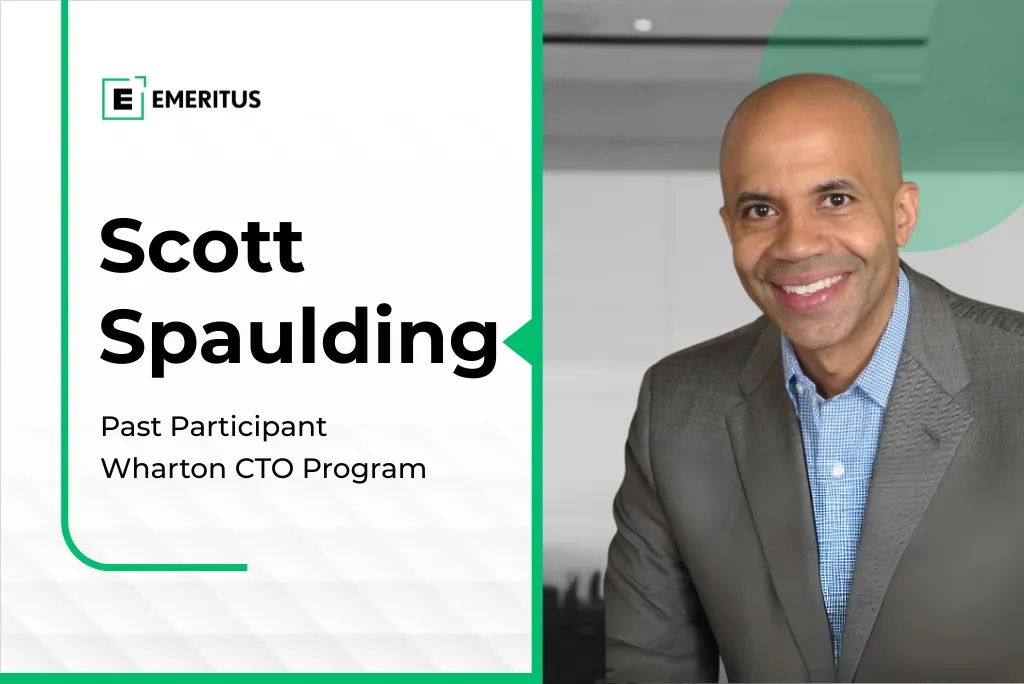
- Q: What inspired you to join the CTO Program at Wharton?
- Q: How has the program helped with your personal or professional goals?
- Q: What specific learnings or aspects of the program most benefited you?
- Q: How did interactions with global peers enhance your experience?
- Q: How important was the Wharton brand in your decision to enroll?
- Q: Would you recommend the CTO Program at Wharton to others in leadership?
- About the CTO Program at Wharton
| Summary:
Scott Spaulding, a seasoned sales leader, recognized the need to speak the language of technology to elevate his executive influence. This blog explores how the CTO Program at Wharton helped him transform into a strategic challenger equipped for cross-functional leadership in a technology-driven world. |
Scott Spaulding did not come from a traditional tech background, but as a seasoned sales leader, he had worked alongside chief technology officers (CTOs), the key decision-makers in his client organizations. The more he engaged with them, the more he realized that he had to speak their language if he wanted to take his leadership to the next level. This required more than business acumen—it also required strategic depth, technological fluency, and executive-level presence.
This realization led him to the Wharton Chief Technology Officer (CTO) Program. What followed was a transformative experience that challenged him to think differently, communicate more persuasively, and lead with renewed clarity for a career in technology. In this interview, Scott shares how this technology leadership development program helped him evolve as a cross-functional executive and why he believes the Wharton brand carries weight at the highest levels of leadership.


Q: What inspired you to join the CTO Program at Wharton?
As a sales leader, many stakeholders I work with are CTOs. I realized that to be an effective challenger in those conversations, I needed to understand their world better—what drives them, what they prioritize, and how they think strategically. The CTO Program at Wharton offered that perspective. It helped me develop a fresh perspective on technology leadership that I could apply directly to my role.
Read more: Wharton Chief Technology Officer Program: Answers to Your Frequently Asked Questions
Q: How has the program helped with your personal or professional goals?
One key takeaway was around leadership identity. There was a segment on leadership templates that encouraged us to define and articulate our core values—how we show up and lead. That process helped me recalibrate my leadership style and better align it with what today’s teams and organizations expect. It was a much-needed reset and a strong reminder of the human side of leadership.
Q: What specific learnings or aspects of the program most benefited you?
The session on executive presence stood out. On the subject of persuasive communication, we explored the balance of pathos, ethos, and logos—emotion, character, and logic. It gave me a framework I now use regularly. When you’re trying to influence stakeholders, especially at the C-suite level, being able to tap into all three dimensions of communication is incredibly powerful.
Read more: Who Should Enroll in the Wharton CTO Executive Education Program?
Q: How did interactions with global peers enhance your experience?
The global diversity of the cohort was a huge asset. One conversation I will never forget was about change management—specifically, the difference between being a firefighter and a fire preventer. A peer challenged me by saying they are the same thing if you frame them right. That kind of debate sharpened my thinking and showed me how much value lies in peer-to-peer learning at this level.
Q: How important was the Wharton brand in your decision to enroll?
The Wharton brand played a big role in my decision. At the executive level, communication needs to be precise and credible. Whether you’re referencing something you learned in the program or simply citing the Wharton name, it gives you a certain authority. It is a drop-the-mic moment in meetings. It signals that you have been trained to think and lead at a high level.
Q: Would you recommend the CTO Program at Wharton to others in leadership?
Absolutely. The program doesn’t just teach strategy and technology—it helps you grow into a more complete leader. Whether in sales, product, or engineering, if you work with technology leaders or aspire to join their ranks, this program will give you the edge you need.
Scott’s story is a compelling example of how leaders with minimal experience in technology can expand their strategic toolkit through the CTO Program at Wharton. By combining executive presence, global perspective, and rigorous frameworks, the program prepares professionals from any background to lead confidently in a technology-driven world.
Explore this technology leadership development program to see how it can support your path to executive growth.
Read more: Wharton CTO Program Reviews: Insights From Past Participants
About the CTO Program at Wharton
The CTO Program at Wharton offers a robust executive education experience tailored for aspiring and current technology leaders alike. This comprehensive program, typically spanning 9 to 12 months, meticulously covers critical domains such as technology strategy, emerging technologies (including AI and blockchain), and innovation management. Delivered through a blend of online modules and an optional on-campus networking event, it provides the flexibility essential for today’s demanding schedules.
Read more: Why You Should Consider the Wharton CTO Program to Master Technology Innovation Strategies
Participants gain invaluable insights from distinguished Wharton program faculty and industry experts, applying program concepts to real-world organizational challenges through an executive reflection project. Enrolling in this technology leadership development program will significantly enhance your strategic leadership skills and cultivate a robust professional network among a diverse cohort of senior technology executives, ultimately accelerating your career trajectory in an increasingly complex technological landscape.