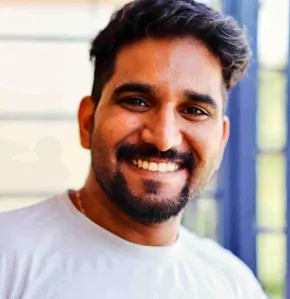
Hiromi Mizutani on How the Berkeley CTO Program Made Him a More Strategic Technology Leader

| Synopsis: Hiromi Mizutani, a seasoned technology executive, shares how the Berkeley CTO Program reshaped his mindset to lead human-centric, enterprise-scale transformation. |
For technology leaders, the real challenge lies in reshaping decision-making, organizational culture, and leadership mindsets to unlock innovation at scale. In this interview, Hiromi Mizutani, a seasoned technology executive and transformation leader with over 20 years of global experience, reflects on his journey through the Berkeley Chief Technology Officer (CTO) Program.
Drawing on his work with Japanese enterprises and his broader global perspective, Hiromi shares how the program helped him move beyond tool-driven transformation to a more strategic, human-centric approach to technology leadership.

In Conversation With Hiromi Mizutani
1. What factors influenced your decision to enroll in the Berkeley Chief Technology Officer Program?
In my work supporting Japanese enterprises through digital transformation, I repeatedly saw that progress often stalled not because of technology, but because of legacy decision-making and management habits. I enrolled in the Berkeley CTO Program because it offered more than technical content—it provided the Silicon Valley mindset and strategic frameworks to lead enterprise change. I wanted to strengthen my ability to bridge traditional Japanese corporate culture with global standards of innovation and execution.
Also Read: Modernize legacy systems with Berkeley CTO program.
2. How did you manage the demands of the Berkeley CTO Program alongside your responsibilities as a senior technology leader?
It was demanding, but I treated the program as a practical leadership toolkit rather than “extra study.” I intentionally connected the coursework to live client work—using frameworks for strategy, roadmapping, and prioritization to improve decisions I had to make anyway. I also protected time through disciplined scheduling and delegation, which made the learning sustainable alongside a senior role.
3. How did interactions with Berkeley faculty and your peer cohort shape your thinking as a technology leader?
The cohort experience was eye-opening. Engaging with technology leaders across industries and geographies helped me see that many “innovation dilemmas” are universal—even if the contexts differ. Faculty discussions around organizational culture, networks, and questioning assumptions gave me the confidence to challenge entrenched ways of working in my market. It shifted my mindset from being a technology manager to becoming a transformation leader.
Also Read: Explore top Berkeley CTO program FAQ.
4. Has the Berkeley CTO program experience changed the way you now evaluate, prioritize, or scale AI and data initiatives across the enterprise in Japan? If yes, how?
Absolutely. Before the program, conversations often centered on implementing tools. Now I prioritize breaking path dependence—reframing the business process and human decision flow before scaling technology. In my book, Leading Transformation, I argue that AI efforts often struggle when they simply automate broken processes. Today, I lead AI initiatives with a human-centric approach, aiming for technology that amplifies human potential and redesigns how work gets done, not just how costs are reduced.
Also Read: Choose the right CTO program for you.
5. What would you say to a technology leader who is considering the Berkeley Chief Technology Officer Program but is unsure whether it’s worth the investment?
I would say: “Don’t just learn technology—learn to lead it.” The ROI isn’t only the credential; it’s the mindset shift and the ability to unlearn outdated assumptions, prioritize what truly scales, and lead with strategic clarity. The program gives you frameworks you can apply immediately and a peer network that continues to challenge and support you long after it ends.
Hiromi Mizutani’s experience highlights the evolving role of the CTO—from technology manager to transformation leader. The Berkeley CTO Program equipped him with strategic frameworks and a global peer network to challenge legacy thinking, scale AI thoughtfully, and lead change with clarity and purpose.
Read more Berkeley CTO program reviews.