
The Power of Presence: How Leaders Can Build Influence in an AI-Enabled World
As organizations accelerate the adoption of AI, automation, and data-driven decision-making, leadership expectations are evolving just as quickly. Technical capability matters, but it is no longer enough. What increasingly differentiates effective leaders is presence—the ability to connect, inspire, and move people to action, even in moments of uncertainty.
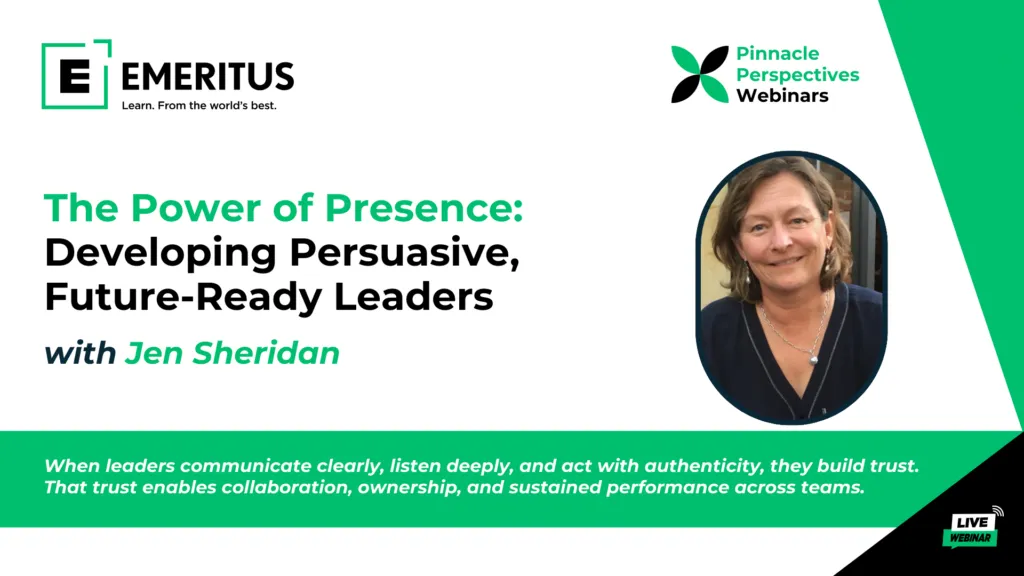
This was the central theme of The Power of Presence: Developing Persuasive, Future-Ready Leaders, a recent Pinnacle Perspectives webinar by Emeritus Enterprise, led by Jen Sheridan, Managing Director at Learn More and a globally recognized leadership educator and executive coach with over 25 years of experience in executive education and leadership development.
What Is Executive Presence Today?
Executive presence is often misunderstood as polish, charisma, or confidence alone. Jen challenged this narrow definition. In today’s fast-moving, AI-enabled environment, presence is not about perfection. It is about clarity, conviction, and connection.
Leadership presence, as discussed in the session, is the ability to project confidence, communicate clearly, and carry oneself with authenticity. More importantly, it is the ability to connect with others emotionally and intellectually, creating commitment rather than compliance.
Jen emphasized that real persuasion starts with presence. How leaders show up, frame a message, and hold a room often matters more than the content itself. When leaders anchor their body language, tune their voice, and tell a clear story, they do not just get heard—they create commitment.
Why Presence Matters More in an AI-Driven World
As AI increasingly takes over routine analysis and execution, the uniquely human dimensions of leadership become more valuable. Leaders are now expected to influence across complexity, manage ambiguity, and lead through constant change.
Jen highlighted that leaders are continuously assessed—often unconsciously—by how they make others feel. The most impactful leaders demonstrate emotional awareness, integrity, and composure under pressure. These qualities shape trust, engagement, and long-term performance.
This shift explains why executive presence is no longer a “nice to have.” It is a core leadership capability for organizations navigating hybrid work, rapid transformation, and high-stakes decision-making.
The I-Presence Model: A Practical Framework for Leaders
To make presence tangible and actionable, Jen introduced the I-Presence Model, a framework designed to help leaders increase trust, influence, and effectiveness.
Communication Aptitude
This outward-facing dimension focuses on how leaders communicate with others. It includes clarity, conciseness, active listening, empathy, and the ability to adapt communication style to different audiences. Jen stressed the importance of being intentional about how leaders want to be perceived, noting that nonverbal cues often outweigh words.
Mental Attitude
Presence is also shaped by a leader’s internal state. Jen encouraged leaders to build emotional regulation and resilience by adopting a growth mindset, letting go of perfectionism, and developing reflection habits such as journaling, coaching, or mentoring. Practices like breathing techniques, self-care, and reducing overthinking help leaders project calm and confidence, especially under pressure.
Authentic Style
Authenticity sits at the heart of trust. Leaders strengthen their presence when their actions align with their values. Jen highlighted the role of self-awareness and emotional intelligence in ensuring consistency between what leaders say and how they behave. Authentic presence is not about performing a role but about showing up in a way that feels genuine and credible.

Presence Is a Choice, Not a Trait
One of the strongest messages from the session was that presence is not innate or fixed. It is a capability that can be developed through awareness and practice. Presence is a choice. Leaders can decide how they want to show up, regardless of context or pressure.
Jen encouraged leaders to regularly reflect on their impact. Who feels heard in meetings? Who feels excluded? What emotional tone does the leader set during challenging conversations? These moments shape leadership effectiveness far more than formal authority ever could.
From Presence to Commitment
Presence is not about style alone. It directly influences outcomes. Leaders with a strong presence create commitment, not just agreement. Jen linked presence to accountability, reinforcing that commitment with accountability closes the gap between intention and results.
When leaders communicate clearly, listen deeply, and act with authenticity, they build trust. That trust enables collaboration, ownership, and sustained performance across teams.

Developing Future-Ready Leaders at Scale
At Emeritus Enterprise, this philosophy shapes how leadership upskilling is designed and delivered. By partnering with globally recognized educators and practitioners like Jen Sheridan, we work with organizations to co-create learning journeys that build critical human capabilities aligned to their unique business context. These programs are practical, engaging, and focused on delivering measurable impact.
As organizations prepare leaders for an AI-enabled future, the focus is shifting from one-size-fits-all training to targeted, high-impact development. Upskilling in areas such as presence, influence, and communication is no longer optional. It is essential for building leaders who can navigate complexity, mobilize teams, and drive meaningful change at scale.