
How the Harvard Medical School Nutrition and Wellness Coaching Became a Turning Point for Taylor Johnson
|
Synopsis: In this article, Harvard Medical School Nutrition and Wellness Coaching program participant, Taylor Johnson, reflects on how evidence-based nutrition education and lifestyle coaching frameworks helped her build the skills, clarity, and confidence to support others on their health journeys—and envision a future rooted in purpose and impact. |
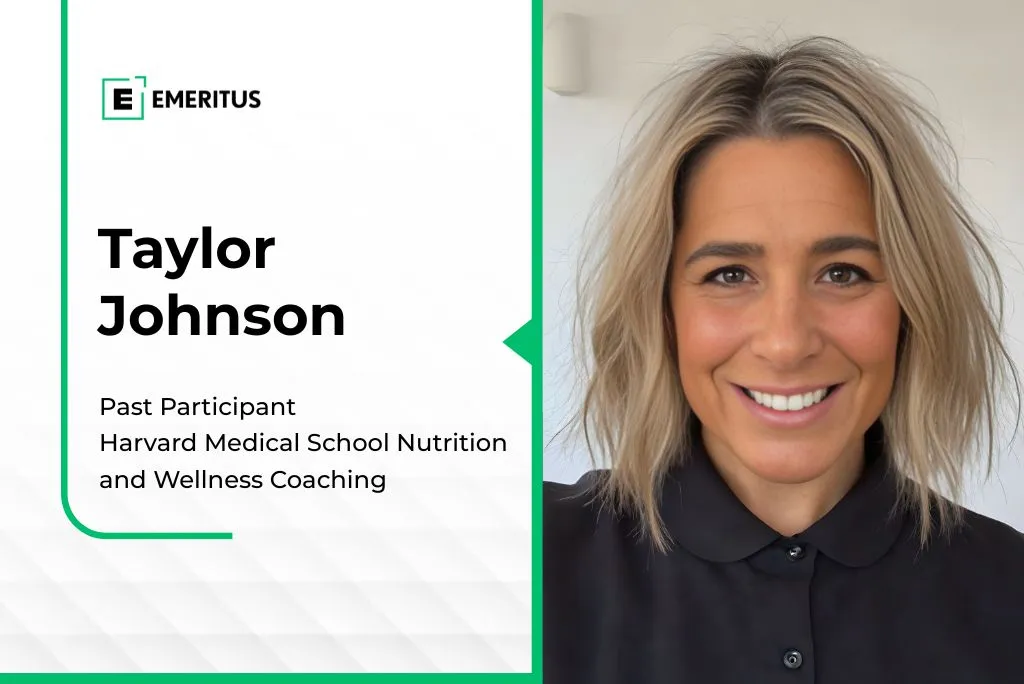
For Taylor Johnson, a former broadcast television journalist and mother, enrolling in the Harvard Medical School Executive Education Nutrition and Wellness Coaching program became a turning point. What began as a personal commitment to improving her health evolved into a deeper understanding of the pillars of lifestyle medicine and how lifestyle and wellness coaching can help individuals adopt and sustain healthy living patterns.
Through this approved training program, Taylor gained the tools to design a sustainable nutrition plan, support clients through meaningful change, and reimagine her future as a professional coach. Below, she shares her experience in her own words.
What motivated you to enroll in the Harvard Medical School Nutrition and Wellness Coaching program?
Taylor: I was 397 pounds and unhappy with the direction my life was going. I found a weight-loss coach on social media who was helpful for motivation in a 1:1 setting, but I wanted to understand the actual science behind nutrition and wellness coaching. I also knew that I wanted to become a coach myself, and that earning this certificate of completion could give hope to someone who felt the way I did.
I want my future clients to know that I was in their shoes and that the Harvard Medical School Nutrition and Wellness Coaching program laid the foundation for me to help them improve their lives mentally, physically, and emotionally.
As a former broadcast television journalist, I like facts and logic. I researched how to change my life best—and later, how to help others. I didn’t want to just lose weight. I wanted to understand how my body worked and how to achieve an actual lifestyle change. I looked at several programs at prestigious universities, but Dr. Frates felt like a professor who wouldn’t be intimidating. Instead, she felt like someone who would cheer me on while teaching evidence-based principles of lifestyle and wellness coaching.


Did you have any prerequisites when you were searching for a program? How did the onboarding or structure help you conclude the Nutrition and Wellness Coaching program?
Taylor: Yes. I wanted a program that allowed flexibility so I could work around my own time limits. My daughter was six years old at the time, and that mattered a lot to me. I also wanted to be challenged intellectually.
I needed to do something for myself. I used to travel the world as a reporter, and suddenly it felt like my brain and my life were stagnant. I needed something that would support my longevity and help me maintain healthy living patterns over time. I also knew I wanted to help others improve their lifestyles using the principles Dr. Frates teaches, which made this coaching program feel like the right fit.
The program has multiple modules and phases. How did you navigate the structure, and what helped you stay organized throughout the 15-week journey?
Taylor: Each week, I started the module as soon as I could. I believe in tackling the hard things first before motivation fades.
I set up a dedicated workspace with no distractions and am fully committed to the process. I kept a journal of my program experience to reflect on how the concepts applied to my own life. It reinforced how nutrition and wellness coaching support the adoption and maintenance of healthy behaviors. I even teach my daughter this same approach to school.
Which tools or methods from the course were most helpful for your own lifestyle or coaching practice?
Taylor: Dr. Frates broke the material into easily digestible modules, which made my learning experience more seamless and enriching. This modular approach made even hardcore science-focused content easy to understand and apply.
I also liked the immediate feedback from the quizzes. That helped reinforce what I was learning and made the material more practical—especially for anyone interested in becoming a certified health and wellness coach.
How did the connections with faculty and fellow learners shape your experience or expand your perspective on wellness coaching?
Taylor: This part of the program was invaluable. I genuinely wish I had the words to describe how extraordinary a teacher Dr. Frates is. I had been out of a university setting for a while and was nervous about how I would do in a certificate program at Harvard Medical School.
When I first met fellow learners in the discussion boards, I felt intimidated. Many were doctors or worked in the medical field. I worried that I wouldn’t understand the science as well as they did.
Over time, I realized that I was learning alongside people with very different experiences, perspectives, and ways of thinking. The group’s diversity, combined with Dr. Frates’ guidance, helped me see that wellness coaching is about developing confidence and perspective—one that I know will allow me to guide future clients better who may come from different backgrounds, have different mindsets, or feel intimidated themselves. It showed me how powerful it can be when health coaches learn from one another while still staying focused on helping clients achieve their own health goals.
How did the Nutrition and Wellness Coaching program help you translate wellness principles into actionable coaching or behavior-change strategies for yourself and others?
Taylor: This is where the program truly changed my life. I started my fitness journey at the same time I began the Harvard Medical School Nutrition and Wellness Coaching program. I weighed 397 pounds on March 1, 2024.
Because of the principles I learned—especially around designing a sustainable nutrition plan—I have lost 150 pounds and am still going. My ultimate goal is to lose 222 pounds, and I have about 80 pounds left. The program’s focus on adopting and sustaining healthy behaviors helped me stay unwavering in the pursuit of my goal.
How manageable was the program’s weekly time commitment for you, and what helped you balance the workload with your personal or professional life?
Taylor: The program turned out to be very manageable as I could seamlessly work around my schedule and complete the modules.
There were several live sessions. I had the flexibility to attend one live and watch the others later. Dr. Frates and the Nutrition and Wellness Coaching team made it easy for working parents and professionals to stay engaged without feeling overwhelmed.
Looking ahead, how do you plan to apply the insights gained from the Harvard Medical School Nutrition and Wellness Coaching program?
Taylor: I hope to continue taking additional certifications from Harvard Medical School, taught by Dr. Frates. I have applied every module I learned directly to my own life.
This course significantly changed my life and its trajectory. I am now focused on maintaining healthy living patterns long-term and being a role model for my daughter. Professionally, I am exploring senior wellness as a specialty—helping adults 65 and over stay healthy regardless of age.
I also want to support people who have a significant amount of weight to lose and who may feel intimidated by short-term programs. My goal is to change lives in a way that is sustainable and lasting.
What advice would you share with someone considering this program?
Taylor: Whether your goal is to help yourself or to support clients as a future coach, this class was essential to my life. I was actually sad when it ended because I felt so inspired by what I learned.
Dr. Frates is an outstanding physician and professor. She responded quickly to my questions and cheered me on as I shared my personal victories. If you are considering this coaching program, take it. It is life-changing.
The Harvard Medical School Nutrition and Wellness Coaching Program at a Glance
| Duration | Format | Key features | Learner benefits |
| 15 weeks | Online + live online |
|
|
Taylor Johnson’s learning journey shows the possibilities when education, structure, and purpose come together. The Harvard Medical School Nutrition and Wellness Coaching program helped her not only achieve her personal goals but also choose a career out of it to continue helping others with the same goal.
Explore the Nutrition and Wellness Coaching program today to support yourself and your clients with sustainable nutrition approaches and healthy living patterns over time.