
The Future of Leadership: Adapting to Change and Leading With Purpose
|
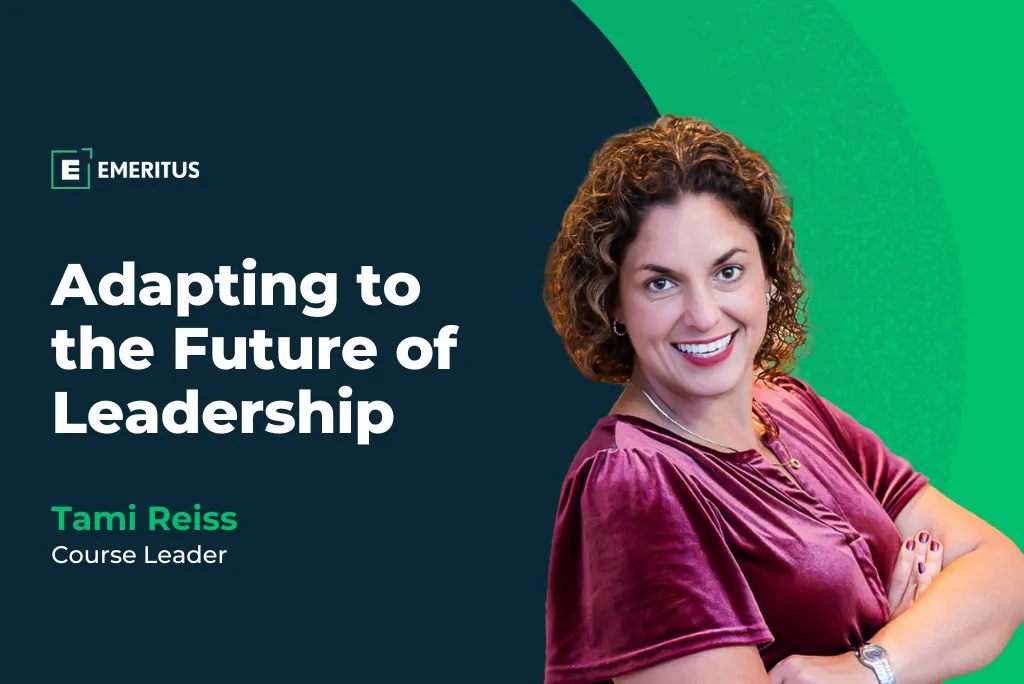
Synopsis: Tami Reiss, former course leader for the Wharton Management Development Program, the Kellogg Product Strategy Program, and the Kellogg Professional Certificate in Product Management Program shares how leaders can adapt to changing currents and guide others through the future of leadership. |
In today’s rapidly evolving business environment, holding a title is not enough. True leaders are defined by their ability to make tough, guiding decisions and to earn the buy-in that turns those decisions into action. Authority alone no longer drives progress. The future of leadership demands influence, clarity, and the courage to lead people toward a better future.
How Can Leaders Succeed in Complex Times?
From market volatility and AI disruption to hybrid teams and shifting employee expectations, today’s leaders operate in constant complexity. According to the World Economic Forum, six in ten workers will need new skills by 2027.1 That is not theoretical—it’s already happening.
In this environment, decision-making is both more difficult and more critical. Leaders must make calls with incomplete data, weigh competing priorities, and guide team members through ambiguity without losing focus. But choosing a direction is just the beginning. The real challenge lies in gaining buy-in, so teams align and act with confidence, even when outcomes are uncertain.
“Teams don’t just follow; they emulate their leader’s thought process.”
—Tami Reiss
Purpose Is the Starting Point
Modern leadership begins by answering two essential questions:
- Where do we want to go?
- Why does it matter to the people we serve?
A strong vision isn’t a list of aspirations—it’s a compelling story about:
- The future you’re building for customers
- Why that future deserves the team’s time and energy
- The sense of purpose behind that vision
This story becomes a strategic compass, helping teams prioritize and stay motivated. With a clear vision in place, leaders must choose what not to do, say no to good ideas in favor of great ones, and set and communicate clear priorities.
These decisions shape the organization’s trajectory and foster a culture of innovation—key drivers of the future of leadership.
But decisions made in isolation do not drive results. Leaders must convince their teams by explaining the trade-offs, showing how success will be measured, and helping every employee understand how their work contributes.
When done well, teams don’t wait for instructions—they make bold, informed decisions of their own.


Leadership is a Team Sport
The image of the lone visionary leader is outdated. Today’s most effective leaders elevate others through:
- Active listening
- Welcoming diverse perspectives
- Cultivating trust across functions, time zones, and cultures
Leadership is not a solo effort—it’s a multiplier effect. The most impactful leaders create clarity and confidence in others and shape environments where people feel ownership, understand the mission, and take initiative.
This is more than a soft skill. Research shows that highly engaged teams are 21 percent more profitable.2 Engagement stems from connection, purpose, and the sense that each person’s contribution matters. Leadership is the engine behind that momentum.


What Skills Do Future-Ready Leaders Need?
- Strategic thinking in complex environments
See beyond immediate fires. Make decisions that serve both short-term outcomes and long-term vision. - Emotional intelligence and empathy
Leadership is about people. Build relationships, defuse friction, and lead in a way that supports the whole person. - Clear and convincing communication
Inspire and align across teams, departments, and cultures. When people understand the why, they buy into the how. - Purpose-driven decision-making
Anchor decisions in a compelling vision. People follow clarity and conviction. - Commitment to continuous learning
The best leaders never stop growing. Lifelong learners model adaptability and set the tone for a resilient culture.
These skills are teachable, transferable, and form the backbone of every Emeritus leadership program.
If you take one thing away from this article, let it be this: leadership isn’t about control—it’s about influence. Set the tone. Ask better questions. Build clarity and trust, and your team will rise to meet the challenge
(Tami Reiss has led and contributed to the Wharton Management Development Program, the Kellogg Product Strategy Program, and the Kellogg Professional Certificate in Product Management Program. The views expressed here are her own.)
References: