Course Preview | Lifestyle and Wellness Coaching from Harvard Medical School
7:32 min
512
Welcome, I'm Dr. Beth Frates, Associate Professor part-time at Harvard Medical School and President of the American College of Lifestyle Medicine. Thank you for being here. I'm so excited to be with you today. Behavior change is a topic that I am personally passionate about and also fascinated by. Studying health and wellness coaching and becoming a coach changed my life. I'm better as a lifestyle medicine consultant, educator, parent, colleague, friend, sister, aunt and overall human being for having learned what I learned in four different coaching courses that I've taken since the year 2008. How could this be true? You'll find out in this program.
I'm delighted to bring all that I know, all that I've learned, all that I've experienced to you in our time together in our six modules on coaching for behavior change. Hopefully, this experience will set you off on your own behavior change adventure so that you can better understand yourself, better understand others and better understand the process of change. The goal is to empower you with theory, tools, facts and skills so that you can empower others to adopt and sustain healthy lifestyles.
If you are currently a coach or a healthcare provider, you may know some of this material, but my goal is to introduce you to new material, things that are useful, that you'll be able to take into your practice right now, today, tomorrow. Some of the materials I'll share will be coaching staples, and some are brand-new tools. For example, you're going to learn the mnemonic for the way of being a COACH. The way of doing a COACH will be shared with you by the five-step collaboration cycle, and I'll share something brand new called the Foundational Lifestyle Pyramid.
Lifestyle medicine is the field that I have focused on since 2006. It was a real honor to be voted into the position of President of the American College of Lifestyle Medicine and serve on the Board of Directors for almost a decade. As a physician in academic medicine, where teaching, writing and learning is essential to our profession, I was honored to be invited to be an item writer for the first board examination for the specialty of lifestyle medicine. And yes, there were coaching and behavior change questions on their boards, and they're still there.
Speaking of teaching and writing, in 2018, I coauthored “The Lifestyle Medicine Handbook,” and in 2023, I coedited the book “Empowering Behavior Change in Patients: Practical Strategies for Healthcare Professionals.”
I love this material and truly enjoy sharing what I know. In this program, we're going to have six modules.
- Module one is an introduction to the coaching session and the coaching way of being and doing.
- Module two focuses on connection.
- Module three covers a roadmap for coaching using the five-step cycle of collaboration.
- Module four covers the importance of stress resiliency.
- Module five discusses the transtheoretical model of change, self-determination theory, acceptance and commitment therapy, along with two pillars of lifestyle medicine: physical activity and nutrition.
- Module six covers cognitive behavioral therapy, positive psychology, appreciative inquiry and motivational interviewing, along with four pillars of lifestyle medicine: sleep, stress, social connection and avoidance of risky substances.
The lifestyle patterns we focus on are the six pillars of lifestyle medicine. That is why they are included in modules five and six.
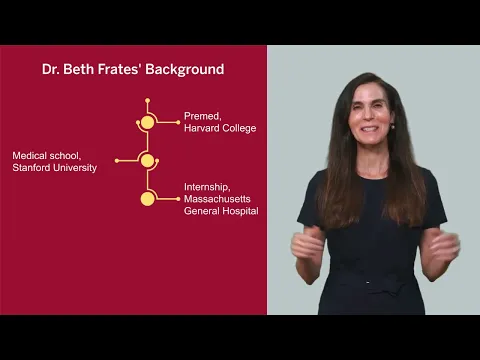
Before we get started, I want to share a little of my background. I went to Harvard for my undergraduate pre-medical studies, then attended Stanford University for medical school. After graduating, I returned to Boston for my internship at Massachusetts General Hospital and completed my residency in physical medicine and rehabilitation, also called physiatry, at Spalding Rehabilitation Hospital.
As a physician, I often talk about patients. In 2008, when I became a coach, I learned that coaches often refer to the people they work with as clients. For this reason, I sometimes use these terms interchangeably, but in coaching we mostly use the term clients. Whether patient or client, we are helping human beings heal, feel energized, and be the healthiest they can be for as long as possible.
As coaches, we work to bring out the best in people. We identify their strengths and encourage them to use them. Each person has inner beauty and true wisdom, and our goal is to draw that out.
This program focuses on coaching for behavior change—helping people adopt and sustain healthy lifestyles. There are athletic coaches, life coaches, and health and wellness coaches. The work in this program aligns with health and wellness coaching. While this content is designed for coaches, it is also for anyone who wants to bring out the best in others and help people live healthier lives.
I believe this program will be an impactful experience that will change your life in some way. I believe you will have a few “aha” moments, and I know you will learn and grow during our time together. I encourage you to fully engage in the learning process through reflections, deeper materials, discussion posts, assignments, quizzes, and other learning activities.
I'm delighted that you have joined me on this behavior change adventure. We've worked hard to make this program a transformational experience. I hope you enjoy your time in these six modules and feel inspired after each one.
Thank you for being here.