
















































































Learn.From the world’s best.
Emeritus collaborates with more than 80 top-tier universities to make high-quality education accessible and affordable worldwide.
 .
.












Explore Programmes
CXO Programmes
Accelerate your career with a certification from top universities
The Emeritus Impact

.
Outcome-Based Learning
Courses are curated and designed to meet specific learning outcomes to boost career growth.
Develop Future-Ready Skills
Our programs help learners build skills they can apply immediately to their jobs. Nine out of ten Emeritus learners reported a positive impact on their careers.
Immersive Learning Experience
Instructor-led courses and cohort-based learning experiences provide one of the highest completion rates in the edtech industry, ie, over 80%.
Source: Emeritus Impact Survey, 2023
500K
Learners Globally
80+
Universities Worldwide
700+
Cutting-Edge Programs
World-Class Faculty
Learn from faculty members who bring a blend of theory and practice, and real-world examples relevant in the ever-changing business landscape to create a dynamic learning experience.


Manish Gangwar

Associate Professor, Marketing Associate Dean – Research and RCI Management; Executive Director- ISB Institute of Data Science (IIDS)
Manish Gangwar, a distinguished faculty member and Executive Director of the Institute of Data Science and Advanced Management Programme in Business Analytics at ISB, is a renowned pr...
Read More

Sudhir Voleti
Associate Professor, Marketing Associate Dean - LRC & Faculty Alignment and Academic Director - IIDS
Professor Voleti’s research focuses on combining data with econometric and statistical methods to explain phenomena of marketing interest such as evolution.

Prof. Madhu Vishwanathan
Senior Assistant Professor, Marketing
Madhu Viswanathan, an Associate Professor of Marketing at ISB, specializes in distribution channels, B2B relationships, salesforce compensation, and their impact on marketing strategi...
Read More


Keri Pearlson
Executive Director of Cybersecurity at MIT Sloan (CAMS): The Interdisciplinary Consortium
Dr. Pearlson has excelled in academia and industry, holding notable roles at Babson College, The University of Texas at Austin, Gartner's Research Board, CSC, and AT&T. She is the...
Read More


Mohanbir Sawhney
Associate Dean for Digital Innovation
Professor Sawhney is a globally recognized scholar, teacher, consultant, and speaker in business innovation, modern marketing, and enterprise analytics. He has written seven managemen...
Read More
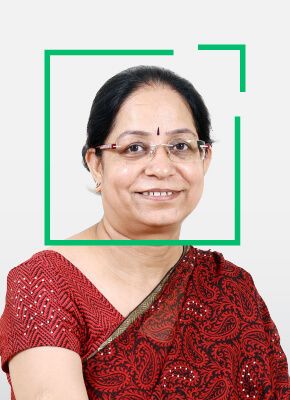

Prof. Archana Shukla
Professor, HRM Director, IIM Lucknow
Over 28 years of teaching, training, and research experience, she specialises in teaching Organisational Structure & Design and Team Building.

Prof. Siddharth S. Singh
Associate Professor, Marketing
Prof. Siddharth S. Singh, a tenured Associate Professor of Marketing at ISB, Hyderabad and Mohali, is an accomplished academic and business professional. With extensive leadership exp...
Read More


Prof. M. K. Nandakumar
Associate Professor, Strategic Management
Dr. M.K. Nandakumar, a professor at the Indian Institute of Management Kozhikode (IIMK), is recognized for his management expertise. He has held positions at esteemed universities in ...
Read More
Our Learner Network
Become part of a community of over 500,000+ learners globally. Build a network for life.

Akansha Mehta
Software Engineer



Trivedi Raj Ratnam
Director Operations


Sharad Bhanu
Vice President


Rohit Piparsania
VP and Group Delivery Head


Jeet Khanna
General Manager


Nisha Mahto
Manager

Our Past Learners Work Here












Disclaimer: All product and company names are trademarks or registered trademarks of their respective holders. Use of product and company names does not imply any affiliation with or endorsement by the holders.
What Graduates are Saying

Thanks to Emeritus for helping me find the best-suited course and making sure all my queries are answered without any delay. A special mention to the career services team for continuously following up and making sure the decision I make is best suited to my career growth.
Read MoreISB Online, Digital Marketing and Analytics

Nitish Malhotra
Placed as Senior Manager Business Analytics at Interactive Avenues through Emeritus Career Services,
Interactive Avenues
It feels good to complete the “Applied Business Analytics” online programme from the Indian School of Business (ISB). It was a very enriching experience, managing work and assignments. I have learned various aspects of Business Analytics and Machine Learning.
Read MoreISB Online, Applied Business Analytics

Rakesh Guleria
Director,
BSR & Co. LLP
The course design is very structured with immense learning , quality reading material , comprehensive videos , best examples and impressive discussions. The course starts with basics, makes the concepts stronger and gradually moves to intense marketing principles. However, the best part of this program was Stukent Mimic simulations and as the name suggests , it allows you to mimic what one would do on the job as professionals. The professors are highly knowledgeable with latest updates. Pacing is also just right to accomplish all the tasks. My concepts and learning has become strong. I am now hands on with the marketing strategies and are strong This course has given me confidence.
Read MoreIIM Kozhikode, Digital Marketing and Analytics

Latika Bolar
Head - Corporate Travel and B2C,
EbixCash
The faculty and cases discussed by the professor were most relevant. Also, the technological solutions and flexibility offered by Eruditus and the college in supporting our concerns was a great experience. Thank you for all the support.
Read MoreIIM Kozhikode, Professional Certificate Programme in Financial Analysis and Financial Management

Amit Kohir
Business Consultant,
Tata Consultancy Services
The programme content was great and the professors delivered the knowledge in the most effective way. Also, the knowledge and discussions that all the participants got to the table was really amazing!
Read MoreIIM Lucknow, Executive Programme in FinTech, Banking & AI Application

Kartheek Tangirala
Technology Consulting Manager,
EY
Learning fintech with all aspects involved in it, starting from finance to technology with presentation and seminar, was really good. It has enhanced my knowledge, given me a broader perspective, and facilitated lateral thinking. The scoring-based model, liquidity management, statistical model, blockchain technology were all taught by the best of experienced professors and industry experts. It has also ignited our minds towards continued professional learning, and from now on, we are in the conquest for more learning and continued education. The smart classroom has definitely given professors a way to discuss topics they would want to in a live classroom.
Read MoreIIM Lucknow, Executive Programme in FinTech, Banking & AI Application

K A Prasad
VP Business Transformation and Change Management,
HSBC
Nitish Malhotra
Placed as Senior Manager Business Analytics at Interactive Avenues through Emeritus Career Services, Interactive Avenues
ISB Online, Digital Marketing and Analytics
Thanks to Emeritus for helping me find the best-suited course and making sure all my queries are answered without any delay. A special mention to the career services team for continuously following up and making sure the decision I make is best suited to my career growth.
Rakesh Guleria
Director, BSR & Co. LLP
ISB Online, Applied Business Analytics
It feels good to complete the “Applied Business Analytics” online programme from the Indian School of Business (ISB). It was a very enriching experience, managing work and assignments. I have learned various aspects of Business Analytics and Machine Learning.
Latika Bolar
Head - Corporate Travel and B2C, EbixCash
IIM Kozhikode, Digital Marketing and Analytics
The course design is very structured with immense learning , quality reading material , comprehensive videos , best examples and impressive discussions. The course starts with basics, makes the concepts stronger and gradually moves to intense marketing principles. However, the best part of this program was Stukent Mimic simulations and as the name suggests , it allows you to mimic what one would do on the job as professionals. The professors are highly knowledgeable with latest updates. Pacing is also just right to accomplish all the tasks. My concepts and learning has become strong. I am now hands on with the marketing strategies and are strong This course has given me confidence.
Amit Kohir
Business Consultant, Tata Consultancy Services
IIM Kozhikode, Professional Certificate Programme in Financial Analysis and Financial Management
The faculty and cases discussed by the professor were most relevant. Also, the technological solutions and flexibility offered by Eruditus and the college in supporting our concerns was a great experience. Thank you for all the support.
Kartheek Tangirala
Technology Consulting Manager, EY
IIM Lucknow, Executive Programme in FinTech, Banking & AI Application
The programme content was great and the professors delivered the knowledge in the most effective way. Also, the knowledge and discussions that all the participants got to the table was really amazing!
K A Prasad
VP Business Transformation and Change Management, HSBC
IIM Lucknow, Executive Programme in FinTech, Banking & AI Application
Learning fintech with all aspects involved in it, starting from finance to technology with presentation and seminar, was really good. It has enhanced my knowledge, given me a broader perspective, and facilitated lateral thinking. The scoring-based model, liquidity management, statistical model, blockchain technology were all taught by the best of experienced professors and industry experts. It has also ignited our minds towards continued professional learning, and from now on, we are in the conquest for more learning and continued education. The smart classroom has definitely given professors a way to discuss topics they would want to in a live classroom.
The Emeritus Advantage

Institute Alumni Status
Become part of a global community

Grow Your Network
Learn with a peer group of business leaders

Career Services
Discover career pathways and opportunities

Finance Options
Loans, no-cost EMIs and flexible payments

Personalised Mentorship
Enhanced learning by expert industry practitioners

Programme Support
A dedicated team available 7 days for query-resolution

Immersive Learning Platform
Learn via high-quality videos, assignments and case studies
Let us guide you in your upskilling journey
Our programme experts, available 7 days a week, will help you choose the right programme.
Get trends and expert opinions on
The Emeritus Blog

Catch the latest updates on