Frequently Asked Questions About IIMK’s CFO Programme Answered by Faculty
- 1. What Makes This CFO Programme Different?
- 2. Who is it for?
- 3. Is it Worth Your Time?
- 4. What Does the IIM Kozhikode CFO Programme Cover?
- 5. What’s the Teaching Style Like?
- 6. What Kind of Peer Group Should I Expect?
- 7. What’s the ROI?
- 8. Is the Kellogg Angle Really Valuable?
- 9. How Does the Capstone Work?
- 10. What Happens After the Programme?
What does it really take to become a modern CFO? To earn the trust of a boardroom, have your finger on the pulse of the markets, and the foresight to lead the business. That’s what the IIM Kozhikode CFO Programme aims to cultivate. But before enrolling, you will have questions about the course, from the schedule and faculty to the ROI and what you actually walk away with.
Recently, in a candid and compelling webinar, the faculty of IIM Kozhikode answered an extensive list of questions about the programme, offering insights about it and its value for aspiring leaders looking to join the coveted C-suite role of a CFO and how they can achieve that. Let’s look at the most frequently asked questions about the programme—answered directly by those who built it.
1. What Makes This CFO Programme Different?

Let’s be honest—executive finance courses are everywhere. But the IIM Kozhikode CFO Programme arrives at a moment when the stakes are higher than ever. Markets are volatile. Boards demand foresight, not just forecasts. And CFOs are no longer gatekeepers of cost, but architects of value.
That’s why this programme is particularly noteworthy. It blends Indian financial governance with global fluency, thanks to its partnership with Kellogg Executive Education. Moreover, the course is structured for action. You don’t just absorb frameworks but learn to apply them through case-based workshops, simulations, and even boardroom scenarios. So by the end, your mind is habituated to thinking about strategy.
2. Who is it for?
a. Mid-Career Finance Professionals Ready to Pivot
If you’re a controller, FP&A lead, audit manager, or tax head—someone who knows the technicals with the ambition and drive to be a C-suite leader, then the IIM Kozhikode CFO Programme is a well-suited first step.


b. C-Suite Executives Seeking Strategic Clarity
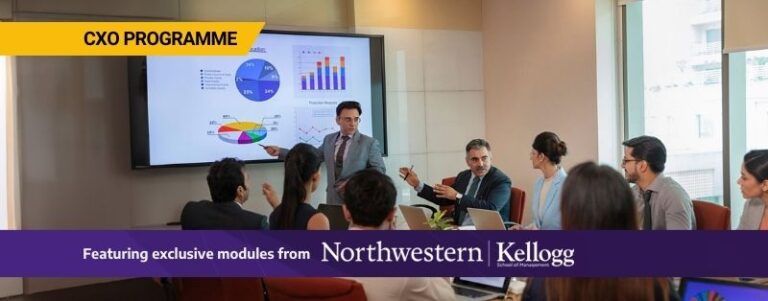
You are already in a leadership position but want to level up your abilities. This could take the shape of having a better grip on cross-functional thinking. Or the skill to read market signals before they turn into boardroom crises. This programme deepens your strategy and hones your leadership skills. As Professor Anandakuttan B Unnithan put it, “We teach finance as a leadership muscle—not just a compliance function.”
ALSO READ: Role of Finance Officer: Know Their Top 10 Skills and Responsibilities
3. Is it Worth Your Time?
Let’s talk logistics.
The IIM Kozhikode CFO Programme unfolds across 12 months—designed not to overwhelm, but to integrate with your already-packed calendar. Furthermore, live online sessions on weekends and evenings respect the schedule of working professionals. Furthermore, you also have the advantage of learning from prerecorded modules by Kellogg, thus weaving global leadership into financial thinking.
The programme also offers a three-day on-campus immersion. This includes simulations, peer debates, real-time decision-making. While this does require commitment, you reap rewards in the form of clarity and capability. So, you’re aiming for the seat where decisions are made, this programme is just what you need to lay the foundation for career growth.
4. What Does the IIM Kozhikode CFO Programme Cover?

Each module of the IIM Kozhikode CFO Programme builds toward sharper judgment and broader strategic command. Moreover, the course flows in a way that mirrors real-world complexity. You explore the following:
- Economic Dynamics and Global Considerations
- Advanced Corporate Finance Strategies
- Data-Driven Decision-Making
- Design Thinking for CFOs
- Risk Management Strategies
- Corporate Governance and Ethical Leadership
5. What’s the Teaching Style Like?
This question cuts to the core. Because in executive education, how you learn matters as much as what you learn. The IIM Kozhikode faculty outlined a distinct approach:
- First and foremost, case-based instruction is at the core of the programme
- Second, each module begins with real-world triggers. For example, a boardroom dilemma, a fraud audit or a valuation tug-of-war
- Then, professors walk through the frameworks, not as theory, but as tools
- Finally, students debate, solve, and then debrief
It is an intense though rewarding learning journey. As one alumnus shared: “The learning stayed because I did the thinking—not just read about it.” What is also important to remember is that the IIMK faculty aren’t just academics. Many sit on corporate boards. Some advise regulators. They teach with one foot in the real world.
ALSO READ: Everything About Financial Risk and The Role of Financial Risk Manager in Minimizing
6. What Kind of Peer Group Should I Expect?
Past batches of the IIM Kozhikode CFO Programme have included finance VPs from manufacturing, tech, and FMCG; audit leaders from the Big Four; strategy and compliance heads from mid-cap firms; and entrepreneurs. So expect sharp minds, cross-industry insight, and lively debates. Furthermore, as a result of the curated selection, you build a lifelong CFO network. One that often outlives the course itself.
7. What’s the ROI?
When the ROI question came up, the IIM Kozhikode faculty made one thing clear: this is not a credential for the sake of a LinkedIn badge. It’s an investment in how you think and how others perceive your value. Furthermore, they shared that many of their alumni reported expanded mandates or promotions within 12 months. Moreover, several took on CFO or Group CFO roles for the first time because they could now speak across operations, tech, and risk, not just finance.
Indeed, according to a recent EY CEO Outlook survey, 90% of leaders believe AI and financial fluency will define the next generation of executives (1). Under these circumstances, your credibility depends on your cross-functional vision. The IIMK CFO programme builds on that.
So if you measure ROI in influence, readiness, and recognition, this programme delivers.
8. Is the Kellogg Angle Really Valuable?
The short answer is yes. Kellogg’s modules challenge you to think globally, lead through volatility, and view finance not just as numbers, but as narratives. That perspective shift is what changes how you lead across borders.
9. How Does the Capstone Work?
The capstone project is the bridge from knowledge to proof of execution.
You have to pick a real-world financial challenge; for example, working capital optimization, cost transformation, or ESG-linked reporting. The end goal of the capstone is to solve your chosen challenge using the tools you have learned.
In some cases, participants even present this project to their board or CXO team. In which case, it becomes a career accelerator. As a faculty member put it, “This isn’t an exam. It’s your pitch to power.”
10. What Happens After the Programme?
IIM Kozhikode CFO Programme alumni receive:
- Lifelong access to select programme materials
- Invitations to industry webinars and meet-ups
- A formal IIM Kozhikode alumni status
- Peer referrals for board positions and consulting gigs
Essentially, the value compounds. As your role evolves, your learning continues to serve.
ALSO READ: How to Manage Project Finances: A Comprehensive Guide for Finance Managers
In the end, the question isn’t whether you’re ready to be a CFO. It’s whether you’re ready to become the kind of CFO that tomorrow demands—decisive, visionary, and strategically sound. Explore the IIM Kozhikode Chief Financial Officer (CFO) Programme—where leadership isn’t taught in theory, but shaped through experience, insight, and action. Discover more on Emeritus and begin a journey that doesn’t just elevate your career but reshapes how you lead the future.
Write to us at content@emeritus.org
Sources:
1. EY survey