Why the Best Healthcare Leadership is Built, Not Born
The COVID-19 pandemic threw a spotlight on the cracks in healthcare leadership. Overnight, doctors were asked not just to heal, but to lead, to make strategic decisions, calm panicked teams, allocate scarce resources, and keep entire institutions afloat. While there are examples of people coming through, many also faltered scrambling to lead through a crisis. This revealed a systemic problem in our healthcare system where leadership is treated as something natural, something that senior male doctors are simply assumed to possess. This assumption is a problem because it leaves vast potential untapped among women, professionals outside the traditional mold, and even among the men thrust unprepared into these roles.
Ultimately, this sort of assumption hurts patients, staff, and the system itself because it deprives healthcare of fresh ideas, inclusive perspectives, and better decision-making. Too often, senior doctors find themselves pushed into leadership roles simply because they’ve risen high enough in their clinical careers. Yet, managing an operating theater and managing an entire healthcare organization are worlds apart. As India’s healthcare sector is undergoing a dramatic transformation. It’s projected to reach $638 billion by 2025, with hospitals, pharmaceuticals, and diagnostics experiencing rapid post-pandemic growth (1), the need for visionary leadership is now more than ever. So, let’s explore what it takes to lead healthcare into the future.
Healthcare Leadership Goes Beyond Clinical Brilliance

The clinical precision and leadership of trained doctors in the OT doesn’t necessarily translate into healthcare leadership on a larger scale, where decisions are strategic, far-reaching, and collective. Thus, without proper training, even brilliant doctors can struggle to manage budgets, motivate staff, or drive innovation.
Furthermore, the lack of diversity in these roles entrenches old habits and limits fresh ideas. A more inclusive, diverse leadership can therefore break stagnancy, bring in new perspectives, and create resilient systems. This is why formal training in healthcare leadership is critical. It equips professionals to lead with clarity and confidence while opening the space to diverse voices, making it more democratic, vibrant, dynamic, and even revolutionary. The XLRI Global Healthcare Leadership for CXOs Programme was created to not only bridge this critical gap but also help professionals step into leadership. Let’s find out how.
ALSO READ: All You Need to Know About Medical Coding in India
How the Global Healthcare Leadership for CXOs Breaks New Ground
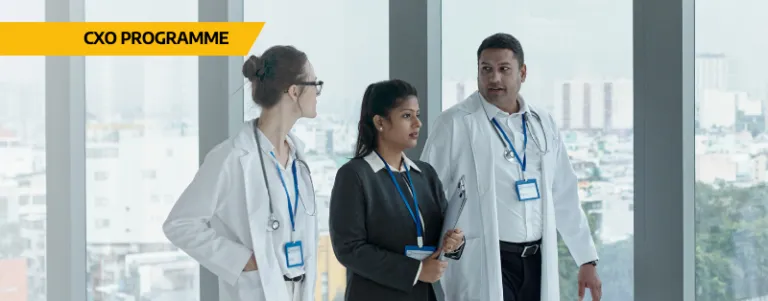
The Global Healthcare Leadership for CXOs Programme is designed to help leaders break free from the echo chamber of conventional thinking. It brings together diverse professionals, fresh perspectives, and future-ready skills to challenge assumptions and foster innovation. Instead of relying on outdated habits or insular networks, it equips healthcare leaders to embrace change, drive progress, and lead with vision.

Here’s what it primarily focuses on:
1. Strategic Mastery
Learn to craft winning strategies that respond to healthcare’s unique challenges. Additionally, master tools for market analysis and competitive positioning to achieve sustainable success.
2. Operational Excellence and Leading With Precision
Gain expertise in operations, risk management, negotiation, and regulations to execute plans flawlessly and reduce risks effectively.
3. Driving Healthcare Forward With Technology and Innovation
Harness the power of technology and AI to innovate, improve operational efficiency, and elevate patient care.
4. Transformational Leadership and Cultural Influence
Lead meaningful change, champion diversity, influence organizational culture, and excel in boardroom dynamics.
5. Governance and Stakeholder Empowerment
Navigate governance with integrity, build stakeholder trust, and ensure compliance while empowering teams and communities.
This Programme, therefore, is a blueprint for bold, inclusive, and visionary healthcare leadership.
Who Should Consider This Programme?
This healthcare leadership programme is crafted for ambitious professionals ready to lead healthcare into its next era. Those who will benefit from this programme include:
- Senior Healthcare Executives: Current C-Suite leaders and senior executives responsible for steering healthcare organizations through complexity and change.
- Emerging Healthcare Leaders: Directors, vice presidents, senior managers, and mid-level professionals looking to step into C-suite roles with stronger strategic and leadership capabilities.
- Healthcare Innovators, Entrepreneurs, and Academics: Trailblazers building startups, creating breakthrough healthcare solutions, advancing research, or redefining traditional care models.
- Consultants, Industry Advisors, and Policymakers: Strategic thinkers shaping healthcare policy, offering expert advice, and guiding organizations through regulatory and operational challenges.
- Allied Healthcare Professionals: Leaders from pharmaceuticals, biotech, medical devices, and healthcare IT eager to gain holistic leadership skills tailored to the healthcare sector.
ALSO READ: Role of AI in Healthcare: Top 5 Advancements in Clinical Practice
Programme Highlights

The XLRI Global Healthcare Leadership for CXOs Programme offers a transformative experience that redefines how leaders in healthcare think, act, and lead. Moreover, by blending academic rigor, practical insights, and diverse perspectives, it helps professionals break free from traditional silos and embrace inclusive, visionary leadership. Here’s how it stands apart:
1. Global Faculty & Perspectives
With faculty from XLRI and Sorbonne Business School, the programme introduces global best practices, exposing participants to fresh ways of tackling challenges beyond local conventions.
2. Real-World Immersion
Through live online sessions and a five-day campus residency, participants work on real-world problems, fostering hands-on learning and authentic peer exchange that breaks hierarchical mindsets.
3. Diversity at the Core
Bringing together professionals from hospitals, policy, biotech, pharma, and startups, the programme creates a rich tapestry of viewpoints, sparking dialogue and challenging assumptions.
4. Applied Learning Through a Capstone
A guided capstone project ensures that participants can apply what they learn to solve organizational challenges effectively, bridging theory and practice seamlessly.
5. Holistic Curriculum
Covering everything from strategy and finance to digital transformation and governance, the programme thus develops leaders who are strategic, operational, inclusive, and ready to lead real change in healthcare leadership.
What You Learn
The XLRI programme modules dive deep into critical areas such as healthcare policy, financial management, quality improvement, and technology strategy, giving you the insight and tools to navigate today’s complex healthcare landscape and drive meaningful change. Here’s what you gain:
- Understanding Financial Data: Start with a pre-programme module that demystifies financial statements and teaches you what the numbers truly mean in healthcare contexts.
- Principles & Tools for Decision-Making: Additionally, learn proven frameworks and tools for making effective, evidence-based decisions in complex, high-stakes environments.
- Crafting Vision & Strategy: Develop the skills to define an inspiring vision, mission, and strategic direction for your organization.
- Managing Financial Performance: Master the key value drivers and financial metrics that underpin sustainable performance in healthcare organizations.
- Building Business Models & Stories: Learn to create robust business models and compelling narratives to communicate strategy and gain stakeholder buy-in.
- Driving Digital Transformation: Furthermore, understand how to integrate technology and craft a digital strategy that improves care and operations.
- Governance & ESG: Explore corporate governance, ESG leadership, and how boards and committees shape healthcare institutions.
- Leading Change & Diversity: Gain tools to lead organizational change and embrace diversity as a strength.
- Navigating Ethics & Crises: Prepare to tackle ethical dilemmas and steer your organization through crises with clarity and integrity.
ALSO READ: How to Become a Successful Healthcare Administrator: A Comprehensive Guide
Our healthcare thus needs more than brilliant doctors. It needs bold, visionary leaders who can navigate chaos, inspire teams, and rebuild trust in a fractured system. The XLRI Global Healthcare Leadership for CXOs Programme, in collaboration with Emeritus, helps you become that leader. So, step up. Break the mold. Lead transformation where it’s needed most and become what our healthcare needs tomorrow.
Sources:
Write to us at content@emeritus.org